
Disposables vs Refillable Vapes in 2026: What Convenience Actually Costs Per mL
Posted by Vigil Carter on 30th Jul 2026
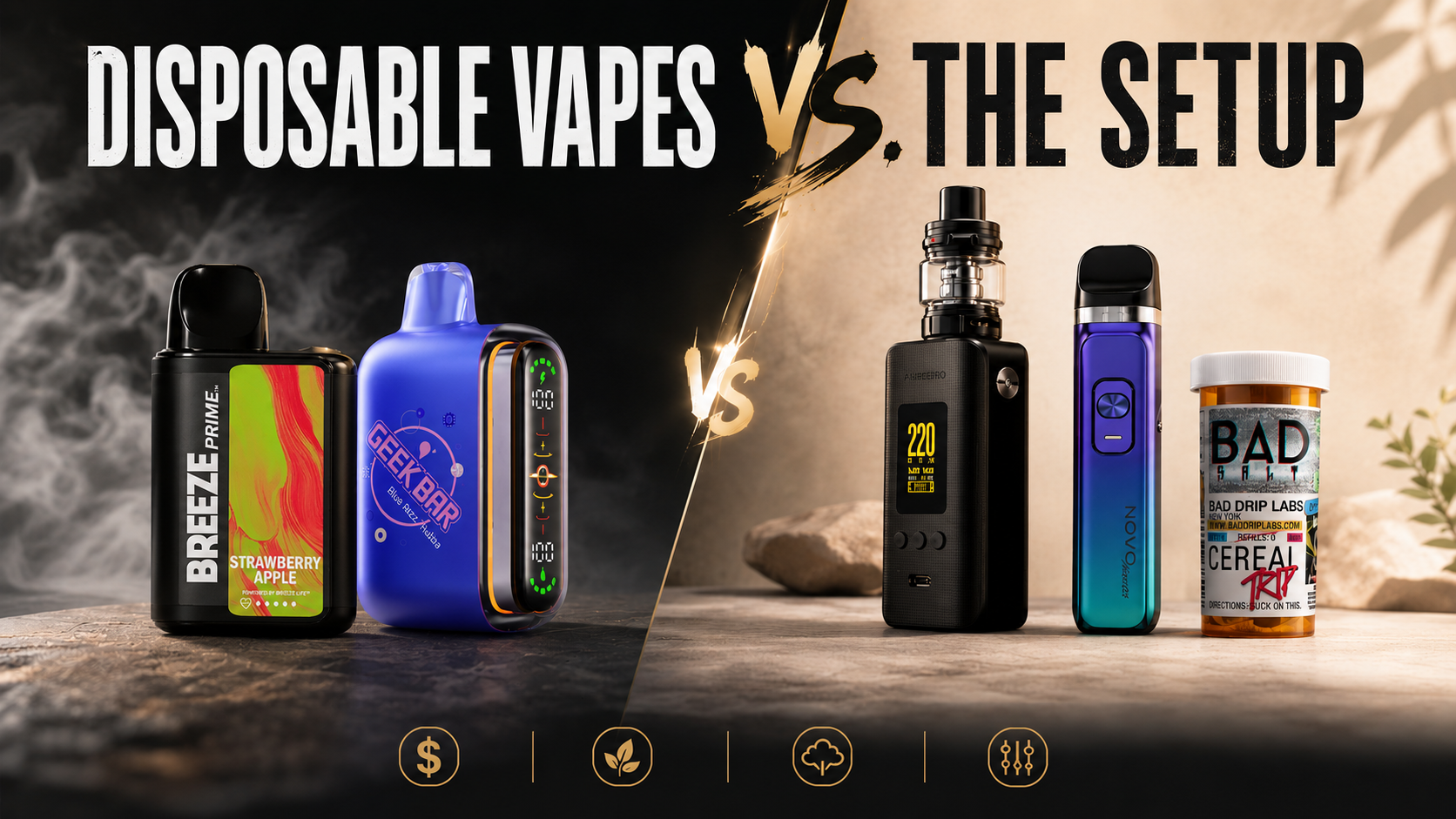
There are two ways to buy a vape, and they are not really competing. One is the convenience buy. The other is the budget buy. Almost every argument about disposables goes wrong because people treat that as one question.
A disposable is the convenience buy. You pay once, you vape, you throw it away. No setup, no maintenance, no decisions.
A refillable setup is the budget buy. You pay a startup fee once, and after that you are only ever paying for juice and coils. That is the whole pitch, and the money lives in the word after.
Inline Vape sells both, and this article prices both honestly using our own current shelf prices. If the numbers say buy a disposable, buy a disposable.
The short version
| If this is you | Buy this |
|---|---|
| You want zero setup and zero commitment | A disposable. Breeze Smoke Pro at $17.99 or Geek Bar Pulse X2 50K at $29.99 |
| You like the disposable experience but want the running cost down | A cartridge-swap kit. Foger Switch Pro Kit at $27.99, then $19.99 pods |
| You vape steadily and want the lowest monthly bill | A refillable salt setup. Starts at $19.99 with the Smok Novo 2C |
| You want the cheapest juice on the shelf | A sub-ohm setup. Kits start around $20 to $30, or GeekVape Aegis Boost III at $45.99 |
The one-line answer: a refillable setup costs somewhere between about $20 and $100 to get going, and after that runs roughly $22 to $36 a month. The same amount of vaping on the most popular big disposable runs about $50 a month, and on a small one about $90. The startup fee is the only thing standing between those two numbers, and you pay it once.
What a disposable actually buys you
Start here, because the case for disposables is real and most cost articles skip it.
Zero setup. No priming, no filling, no wattage, no coil to learn about. You open it and it works. Nothing else in vaping is that simple.
Zero commitment, and this is the underrated one. If you lose a disposable, you are out one device. If it dies early, you grab another and get on with your day. There is nothing to protect, nothing to maintain, nothing that has your juice supply locked inside it. A personal setup is the opposite: it is a thing you own. Lose it or break it and it stings, because you paid a startup fee for it and your bottle is useless without it.
Nothing to carry. No spare pods, no bottle in a bag, no charger you meant to bring.
The hardware also stopped being disposable in the old sense. Most of what we stock is rechargeable, screen-equipped, dual-mode, and holds more liquid than a refillable tank does.
| Device | Liquid | Rated puffs | Price |
|---|---|---|---|
| Geek Bar Mate 60K Kit | 15mL pod | Up to 60,000 | $29.99 |
| Geek Bar Pulse X2 50K | 18mL | Up to 50,000, or 25,000 in Pulse mode | $29.99 |
| Foger Switch Pro Kit | 19mL pod | Up to 30,000, or 18,000 in Boost mode | $27.99 |
| Humble X Fifty Bar 20K | 18mL | Up to 20,000 | $21.99 |
| Fifty Bar USA Made | 16mL | 6,500 plus | $19.99 |
| Breeze Prime | 10mL | Up to 6,000 | $22.99 |
| Breeze Smoke Pro | 6mL | Up to 2,000 | $17.99 |
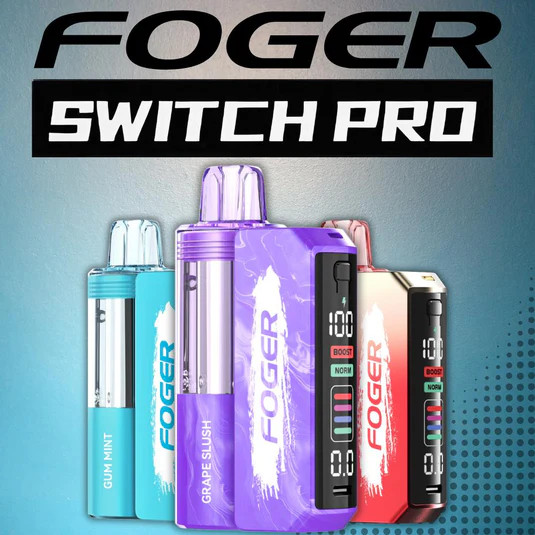
Two of those sit between the categories. The Foger Switch Pro Kit and the Geek Bar Mate 60K Kit separate the battery from the liquid, so you keep the battery and click a fresh pre-filled pod onto it. That is a pod mod in everything but name, except you never touch juice. It is the cheapest way to cut your running cost without changing anything about how you vape. We covered the Mate on its own in the Mate 60K review and lined up all three current Geek Bars in Pulse 2 vs Pulse X2 vs Mate 60K. If dual modes are new to you, Boost mode explained covers why one device advertises two puff counts.
The budget buy: a startup fee, then juice and coils
Everything about the refillable side comes down to one sentence. You pay a startup fee once, and after that you are only paying for juice and coils.
The mistake people make is assuming that startup fee is large. It is whatever you want it to be.
The startup fee goes in levels
A setup runs from about $20 to $100 and up depending on what you pick, and past that it is entirely down to taste. Batteries, spare tanks, a second device for a second flavor, all optional. Nobody needs the top of this list to start.
| Level | Device | Price |
|---|---|---|
| Entry, salt | Smok Novo 2C Kit | $19.99 |
| Entry, salt | GeekVape Sonder Q2 | $19.99 |
| Entry, salt | Smok Igee A1 650mAh | $17.99 |
| Entry, sub-ohm | Basic sub-ohm kits | $20 to $30 |
| Middle, sub-ohm | GeekVape Aegis Boost III Kit | $45.99 |
| Middle, salt | Smok Propod GT or Novo Master 30W Leather | $27.99 |
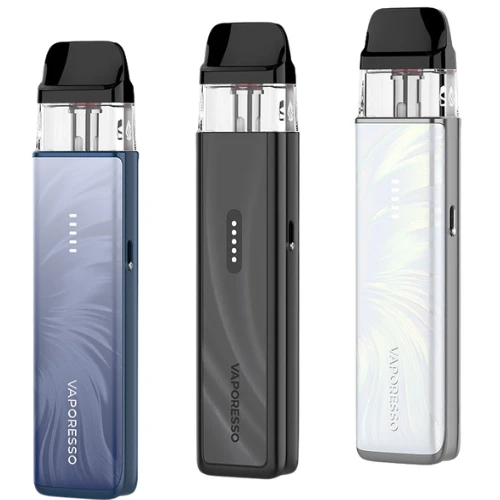
| Middle, salt | Vaporesso XROS 6 Mini | $29.99 |
| Upper, salt | Vaporesso XROS Pro 2 | $49.99 |
| Upper, either lane | Smok Nord 6 Kit, Aegis Boost Pro, Aegis Force, X-Priv Solo | $57.99 to $59.99 |
| Top | Geek Vape L200 Kit | $97.99 |
Twenty dollars is a real entry point, not a technicality. The Smok Novo 2C and the GeekVape Sonder Q2 are both $19.99 and both complete salt setups. Either one costs about what a single large disposable costs. That is the number to hold onto, because the startup fee is not the barrier people think it is. It is one disposable's worth of money, spent once, on something that does not get thrown away. The same is true on the sub-ohm side: a sub-ohm kit can be had for as little as $20 to $30. Spending more buys you battery life, power and build quality, not the ability to vape.
Then it is just juice and coils
This is where the budget buy earns its name. Once the device is bought, your entire ongoing cost is a bottle and the occasional pod or coil.
Take 30mL a month, roughly 1mL a day, a steady but not heavy pattern. Here is what each route actually costs per month once you are running.
| Route | Startup fee | Then, per month |
|---|---|---|
| Breeze Smoke Pro, 6mL each | none | about $90 |
| Geek Bar Pulse X2 50K, 18mL each | none | about $50 |
| Foger Switch Pro then $19.99 pods | $27.99 | about $32 |
| Novo 2C plus salt plus pods | $19.99 | about $22 to $35 |
| XROS 6 Mini plus salt plus pods | $29.99 | about $22 to $36 |
The juice is one 30mL bottle a month, between $12.99 and $17.99. The coils are the variable: XROS pods are $17.99 for four, Novo pods are $12.99 for three, and Igee pods are $12.99 for three, so call it $4.33 to $4.50 a pod. A pod lasts one to four weeks depending on what you put through it, and dark sweetened flavors shorten that a lot, which the sweeteners and coil gunk guide gets into. Two pods a month puts you at the bottom of that range, four puts you at the top.
So the honest comparison is this. About $22 to $36 a month refillable, against about $50 a month on the most popular big disposable and about $90 on a small one. Call it $14 to $28 a month saved against the Pulse X2, and $54 to $68 against the Breeze Smoke Pro.
The startup fee disappears fast at those numbers. A $19.99 Novo 2C against Pulse X2 spending pays for itself in the first month. Even the $97.99 L200, the most expensive thing on this page, is even in roughly four to seven months and free after that.
And notice the cartridge-swap row. The Foger Switch Pro captures most of the monthly saving without you ever opening a bottle. If the maintenance is what puts you off, that is the option that skips it.
Refillable is two different decisions, not one
People say refillable as if it is one thing. It is two, and picking the wrong one is why some people try a pod system, hate it, and go back to disposables.
Lane one: salt and pod devices
This is the lane that replaces a disposable. High nicotine, low power, tight mouth-to-lung draw, small discreet hardware. If you like how a disposable feels, this feels like that.
- Smok Igee A1 650mAh, $17.99, and the Smok Novo 2C Kit, $19.99. The two cheapest ways to find out whether you like refilling at all.
- Vaporesso XROS 6 Mini, $29.99. The default recommendation. Small, reliable, easy to fill, pods cheap and well stocked.
- Smok Propod GT 700mAh, $27.99. Simple and durable, no menus to learn.
- Smok Novo Master 30W Leather, $27.99. Same idea with 30W of headroom and a leather wrap.
- Vaporesso XROS Pro 2, $49.99. More battery and more control if you want one device to last all day.
- Smok Nord 6 Kit, $59.99. The crossover. Runs salt happily and pushes into restricted lung vaping when you want more.
Lane two: sub-ohm devices
Worth saying before the list, because it stops the two lanes reading as a wall: the line between them is blurrier than it looks. Some of the more powerful salt and pod kits happily run sub-ohm juice, because they take low-resistance coils and push enough wattage to make sense of them. The Aegis Boost family is the obvious example, and plenty of people buy one specifically so they can run freebase in it some days and salt in it others. If that sounds like you, buy one device that does both rather than two that each do half.
Different activity. Lower nicotine, much more vapor, direct lung draw, freebase liquid in big bottles. If the draw styles are unfamiliar, MTL, DTL and RDL explained is the primer.
- GeekVape Aegis Boost III Kit, $45.99. The value pick and the one we point most people at. 5W to 60W, a resistance range that covers sub-ohm and tighter setups, and a 5mL cartridge, so it does the whole job without pushing you into mod territory.
- Geek Vape Aegis Force, $59.99. Rugged and versatile, comfortable with salt or sub-ohm depending on how you set it up.
- Geek Vape Aegis Boost Pro Kit, $57.99. The other dual-purpose option if you want the Boost platform with more power.
- Smok X-Priv Solo Kit, $59.99. Straightforward single-battery sub-ohm performance.
- Geek Vape L200 Kit, $97.99. Dual battery, 200W, for someone who wants the ceiling.
The Boost III and the Force are worth calling out together. Both handle either lane, so if this article has you undecided, one of those two postpones the decision without wasting the purchase. More on the general shape of the choice in open vs closed pod systems and the best new pod vapes of 2026.
Why sub-ohm still wins on budget even though it burns more
Here is the objection, and it is a fair one. Sub-ohm devices go through juice noticeably faster than a salt pod device does. More power, more vapor, more liquid per puff. A sub-ohm vaper can easily use two or three times the mL of a salt vaper.
So why is it still the cheaper lane? Because the bottles are bigger, and bigger bottles cost dramatically less per mL.
| Format | Typical price | Cost per mL |
|---|---|---|
| Salt, 30mL | $12.99 to $17.99 | $0.43 to $0.60 |
| Freebase, 60mL | $15.99 | $0.27 |
| Freebase, 100mL | $17.99 | $0.18 |
| Freebase, 120mL | $21.49 | $0.18 |
Run the two side by side. A salt vaper at 30mL a month pays about $18 for juice. A sub-ohm vaper burning double that, 60mL a month, pays about $10.80 out of a 100mL bottle. Twice the liquid, still a smaller bill. Even at triple the consumption, 90mL a month, sub-ohm juice comes in around $16.20 and stays under the salt figure.
That is the whole trick. Salt comes in 30mL because the nicotine is concentrated and you use less of it, so its per-mL number is always going to look worse next to a 100mL freebase bottle. It is a format difference, not a rip-off. Match the liquid to the device and it stops being confusing: freebase goes in sub-ohm devices, salt goes in pod devices. Putting 50mg salt in a sub-ohm tank is unpleasant and putting 3mg freebase in a pod device is pointless. The VG and PG guide explains why the liquids are built differently.
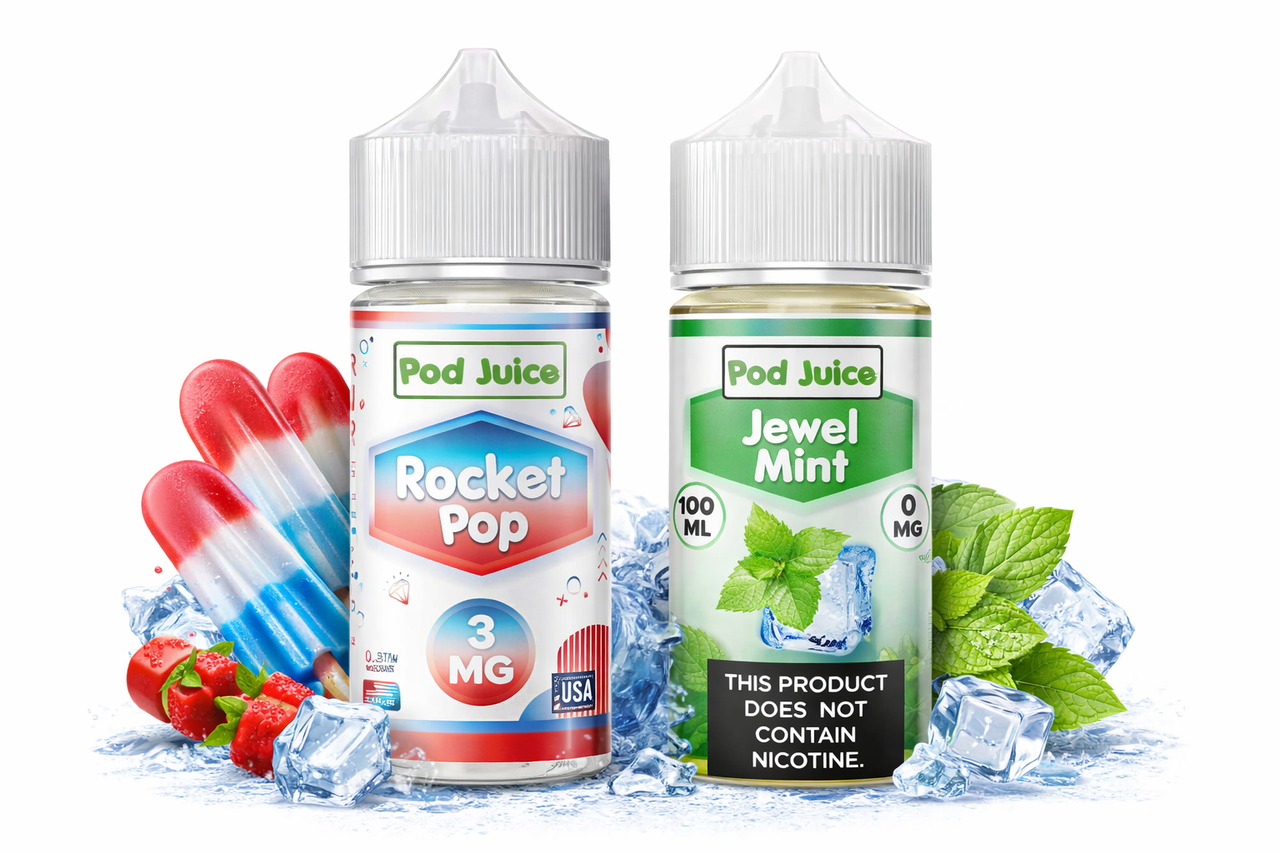
What is on the shelf and moving right now:
- SaltyLicious 30mL Nic Salt, on sale at $14.99. Twenty four flavors and four strengths at 18mg, 30mg, 50mg and 60mg, a wider nicotine range than almost anything else on the wall. If you want to come down off 50mg gradually, or you want more than 50mg, this is the bottle that lets you.
- Pod Juice Jewel Salt 30mL, $17.99. Our deepest-stocked salt.
- Pod Juice Raz Edition Nic Salt 30mL, $17.99. The Raz profile in a bottle, for people who liked the disposable.
- Bad Salt 30mL, $12.99. The cheapest salt on the shelf at $0.43 per mL.
- Reds Apple eJuice Salt Iced 30mL, $17.99, and Candy King on Salt 30mL, $16.99.
- Pod Juice 100mL Sub Ohm, $17.99. Freebase, and the cheapest liquid we sell per mL.
- Coastal Clouds 60mL, $15.99. Freebase, and the flavor range people keep coming back for.
Pod Juice and Coastal Clouds both run salt and freebase lines, which makes them easy to stay with if you switch lanes later. Full walls at Salt-Based E-Liquid and Sub-Ohm E-Liquid, replacement pods and coils at Pods and Coils. If you want to go further down the cost curve than any bottle, we stock Make Your Own E-Liquid supplies, with a walkthrough in how to make your own e-liquid.
The other reason people switch: it tastes better
Cost gets people reading. Taste is what actually makes them stay.
The general consensus among vapers is that a refillable setup tastes better than a disposable. That is not universal and it is worth saying so plainly: plenty of people are perfectly happy with their disposable and would not thank you for handing them a bottle. But if you ask around, most people who have run both will tell you the setup wins on flavor, and there are a few concrete reasons why.
- The coil is fresh when you want it to be. A disposable runs one coil from the first puff to the last, so the flavor at 40,000 puffs is not the flavor at 400. On a refillable device you swap a $4 pod and you are back to day one.
- You control the juice. Brand, flavor, nicotine strength, and how sweet you want it. A disposable gives you one fixed combination chosen by someone else.
- You control the hardware. Airflow and power change how a flavor reads, and sub-ohm devices in particular produce a fuller flavor than any sealed device is built to deliver.
- You are not locked in. If a flavor disappoints you at 6mL in, you pour the rest out and open a different bottle. At 18mL into a disposable you are stuck with it.
None of that makes a disposable taste bad. It makes a setup taste better for longer, which is a different claim and an easier one to defend.
Flavor, and knowing what is in it
Cost is the argument people lead with. It is usually not the reason they switch.
A disposable gives you one flavor for the life of the device. Buy a 50,000 puff device on Monday and get tired of blue razz by Thursday, and that is your Thursday. A bottle and a refillable device means you change whenever you want, and you never lose a flavor to a discontinued device, because the juice and the hardware are separate purchases. Flavor fatigue is real and has a name, covered in what is vaper's tongue.
Then there is the sourcing question, and this is where the two sides of the article separate most cleanly.
Bottled e-liquid is American-made as a matter of course. Domestic manufacturing is the norm rather than the exception in that category, and it holds across every e-liquid brand on our shelf. So if where your juice is made matters to you, a refillable setup settles the question by default. You buy a bottle, you read the label, and you know.
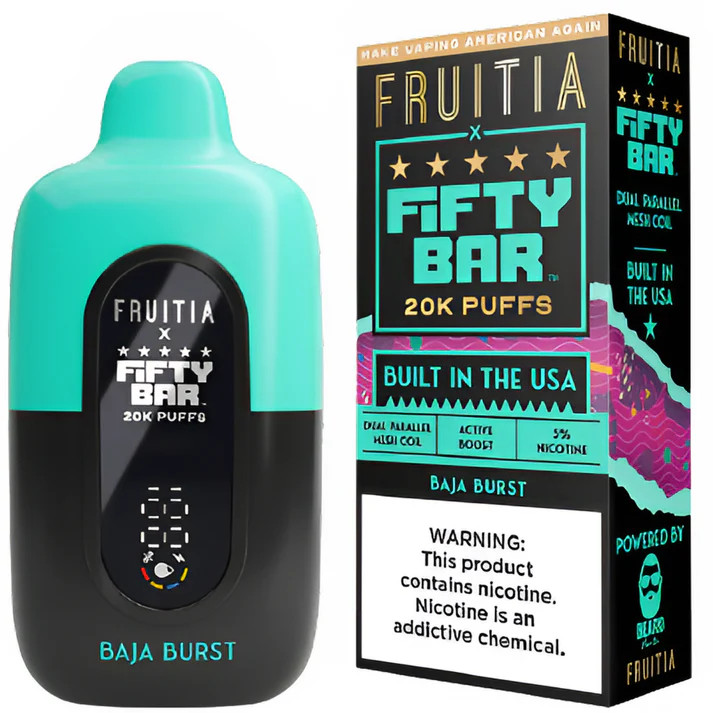
In the disposable category that transparency is rarer, and one brand in our lineup is specific about it. Fifty Bar's e-liquid is made in the USA. The device itself is imported from overseas, and it is filled and assembled here in the States under their brand. That is the precise claim, and precision is the point: it is not a blanket "made in America," it is a clear statement about which part is domestic. Every other disposable brand we carry is simply silent on the question, which is an observation about what they choose to put on the box rather than an accusation. We stock Fifty Bar two ways:
- Fifty Bar USA Made Disposable, $19.99. 16mL, 50mg, USB-C rechargeable, 6,500 plus puffs.
- Humble X Fifty Bar 20K, $21.99. 18mL, 50mg, 800mAh rechargeable, up to 20,000 puffs.
Worth being clear about the limits of that point. Plenty of bottled e-liquid is also mixed in the United States, and plenty of good hardware is not. It is one factual differentiator inside one category, not a ranking of quality.
And one aside, if you want something different entirely. The Ploox Molasses 75K is not really part of this comparison, because it is a hookah vape rather than a nicotine disposable. It runs 5mg where everything else on this page runs 50mg, which is normal for the shisha category and a tenth the strength. But it holds 40mL for $24.99, it is rated to 75,000 puffs, and reviewers consistently say the molasses-style flavor is the best thing about it. If flavor rather than nicotine is what you are actually after, it is worth a look on its own terms.
Where the budget buy costs you something
If this section were missing you should not trust the rest of the article. A refillable setup is worse than a disposable in specific, real ways.
- It is a commitment. You own a thing now. Lose it, drop it, leave it in a jacket, and you are out the startup fee and holding a bottle you cannot use until you replace the device. A disposable can be lost with a shrug.
- There is a learning curve. Priming a pod, waiting before the first pull, matching nicotine strength to the device. None of it is hard, all of it is more than zero, and getting it wrong produces a burnt pod on day one.
- Coils and pods are consumables. They gunk up, flavor fades, you replace them. That is the ongoing cost built into the monthly table above, and it is the line most cost comparisons quietly leave out. Mesh coils vs standard coils covers what actually wears out.
- You carry a bottle. And you have to remember it exists before a long day.
- Charging is on you. Most big disposables recharge too, but a pod device that dies mid-afternoon is a bigger problem than reaching for a fresh device.
- Leaks happen. Rarely, on good hardware, but a disposable has never leaked in anyone's pocket because there is nothing to open.
There is also the case where the math simply favors the disposable. If you vape a few days a week, a 6mL device lasts weeks and your total spend is small either way. Monthly running cost only becomes interesting once your volume is steady. Our realistic guide to how long disposables last is a better tool than a spreadsheet if you are unsure where you land.
Who should buy what
The occasional vaper
Buy a disposable and stop reading. Breeze Smoke Pro at $17.99 or Breeze Prime at $22.99, compared directly in Breeze Prime vs Breeze Smoke Pro. Your annual spend is low regardless, so buy the experience you like.
The vaper who does not want to own anything
Also a disposable, and that is a legitimate reason rather than laziness. If losing devices is a pattern for you, or you want zero maintenance, the convenience buy is the correct buy. Go big to cut the per-device cost: Pulse X2 50K or Mate 60K at $29.99.
The heavy vaper who wants the bill down without the maintenance
A cartridge-swap kit. Foger Switch Pro Kit at $27.99 with $19.99 pods, or the Geek Bar Mate 60K Kit at $29.99 with $19.99 pods. Keep the battery, swap pre-filled pods, touch no liquid, and cut roughly a third off the monthly bill.
The vaper who wants the lowest monthly bill
A refillable salt setup, and start cheap. Smok Novo 2C at $19.99 or Igee A1 at $17.99, a bottle of SaltyLicious at $14.99 or Bad Salt at $12.99, and a three pack of pods at $12.99. Under $46 to start, then about $22 to $35 a month. Step up to the XROS 6 Mini at $29.99 when you know you like it.
The vaper who wants the cheapest juice
Sub-ohm, and it does not have to be expensive. Basic sub-ohm kits start around $20 to $30 in Starter Kits. If you would rather buy once, the GeekVape Aegis Boost III at $45.99 is the one to start with, or step up to an Aegis Force at $59.99, both of which also run salt. Feed it Pod Juice 100mL or Coastal Clouds 60mL.
The vaper stepping down in nicotine
Refillable, and it is not close. A disposable gives you whatever it was filled with, almost always 50mg. A bottle lets you choose, and SaltyLicious runs 18mg, 30mg, 50mg and 60mg across the same 24 flavors, so you can drop a step without changing anything else you like about it.
The buyer who cares where it was made
In disposables, Fifty Bar USA Made at $19.99 is the one that states it. In refillables the question mostly answers itself, because the e-liquid brands we carry are American-made, so any bottle off the salt or sub-ohm wall gets you there.
FAQ
What does a refillable setup actually cost to start? Between about $20 and $100, depending entirely on what you pick. The Smok Novo 2C and the GeekVape Sonder Q2 are both $19.99, about the price of one large disposable. Basic sub-ohm kits start around $20 to $30, the Aegis Boost III is $45.99, and the L200 at $97.99 is the other end. Batteries and extras push it higher, and that is a preference rather than a requirement.
What does it cost after that? Juice and coils, nothing else. About $22 to $36 a month at 30mL a month, made up of one bottle between $12.99 and $17.99 plus two to four pods at around $4.33 to $4.50 each.
How long until it pays for itself? Against Pulse X2 spending of about $50 a month, a $19.99 Novo 2C is even inside the first month. Even the $97.99 L200 is even in roughly four to seven months.
Is a disposable ever the better buy? Yes. If you vape occasionally, or you lose devices, or you genuinely do not want to own and maintain anything, the convenience buy wins and the monthly math never gets big enough to matter.
Does sub-ohm not burn through juice faster? It does, often two or three times as fast. It is still the cheaper lane, because freebase comes in 60mL and 100mL bottles at $0.18 to $0.27 per mL against $0.43 to $0.60 for 30mL salt. Double the consumption at a third of the price per mL is still a smaller bill.
Can I get the savings without refilling? Mostly. A cartridge-swap kit like the Foger Switch Pro drops you to about $32 a month on pre-filled pods with no bottle involved.
Which liquid goes in which device? Salt in pod and salt devices, freebase in sub-ohm devices. Salt-Based E-Liquid for the first, Sub-Ohm E-Liquid for the second.
Do any disposables say where they are made? One brand in our lineup is specific about it. Fifty Bar's e-liquid is made in the USA, while the device is imported and then filled and assembled in the States under their brand. The rest do not state it either way.
Does a refillable setup really taste better? Most people who have used both say yes, though it is not unanimous. The concrete reasons are that you can put a fresh coil in whenever you want, you pick the juice and the strength yourself, and airflow and power change how a flavor reads. A disposable runs one coil from first puff to last.
Is bottled e-liquid made in America? As a rule, yes. Domestic manufacturing is the norm in that category and it holds across the brands we carry, so a refillable setup answers the question by default. In disposables it is rarer, and Fifty Bar is the brand in our lineup that states it.
Where can I buy all of this? Inline Vape. Everything named here is linked to its page, or start from Disposables, Starter Kits, Pod-Based Devices, Box Mods and Tanks, Pods and Coils, Salt-Based E-Liquid and Sub-Ohm E-Liquid.
Where to buy
All of it is on the shelf at Inline Vape, and we sell both sides of this on purpose. If convenience is what you are buying, buy the disposable and do not feel bad about it. If you want the monthly bill down, the startup fee starts at $19.99, and after that it is only ever juice and coils.
- Disposables
- Starter Kits
- Pod-Based Devices
- Box Mods and Tanks
- Pods and Coils
- Salt-Based E-Liquid
- Sub-Ohm E-Liquid
Prices and capacities are current as of publication and taken from our own catalog and manufacturer specifications. Stock and pricing change, so the product page is always the authority.
WARNING: This product contains nicotine. Nicotine is an addictive chemical.
For adult use only. You must be 21 or older to purchase. Keep all nicotine products away from children and pets.