
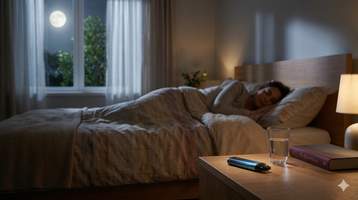
Vaping and Sleep: Understanding the Impact of Nicotine on Your Rest
30th Mar 2026
We’ve all been there: it’s late at night, you’re winding down with your favorite show, and you’re enjoying some flavorful clouds from your device. It feels relaxing, but when your head finally hits the pillow, your brain refuses to shut off. You toss and turn, and even when you do fall asleep, you wake up feeling groggy and unrefreshed. If this sounds familiar, your late-night vaping routine might be the culprit.
While many vapers find the act of vaping to be a relaxing ritual, the nicotine in your Vape Juice is a powerful stimulant. Much like a late-night espresso, nicotine can play havoc with your body’s internal clock. In this guide, we’ll dive into the science of how vaping affects your sleep cycles, the "nicotine itch," and how you can balance your hobby with a restorative night’s rest.
The Science: Nicotine as a Stimulant
Nicotine is chemically classified as a stimulant. When you inhale vapor, nicotine enters your bloodstream and triggers the release of adrenaline and dopamine. This increases your heart rate, raises your blood pressure, and sharpens your alertness. While this is great for a mid-afternoon energy boost at work, it’s the exact opposite of what your body needs to enter a sleep state.
According to [External Link: Sleep Foundation Studies on Nicotine], nicotine can interfere with your circadian rhythm—the internal "clock" that tells your body when to sleep and when to wake. By stimulating your nervous system late in the evening, you are essentially telling your brain that it is still daytime, making it much harder to fall into a deep, natural sleep.
How Vaping Disrupts Sleep Cycles
Sleep isn't just one long block of rest; it’s a series of cycles consisting of Light Sleep, Deep Sleep, and REM (Rapid Eye Movement) sleep. Nicotine consumption, especially close to bedtime, has been shown to disrupt these cycles in several ways:
- Increased Sleep Latency: This is the technical term for how long it takes you to fall asleep. Nicotine users typically take significantly longer to drift off than non-users.
- Fragmented Sleep: Nicotine can cause you to wake up more frequently throughout the night. Even if these "micro-awakenings" are brief, they prevent you from staying in the restorative stages of sleep.
- Suppressed REM Sleep: REM is the stage where your brain processes emotions and memories. Stimulants like nicotine can shorten the duration of REM sleep, leading to cognitive "fog" the next day.
- Nicotine Withdrawal: Because nicotine has a relatively short half-life, your body can actually begin to experience mild withdrawal symptoms while you sleep, causing you to wake up craving a hit.
Vaping vs. Sleep Quality: A Comparison
|
Factor |
Daytime Vaping |
Late-Night Vaping (Within 2 hours of bed) |
|
Heart Rate |
Elevated (Productivity boost) |
Elevated (Interferes with relaxation) |
|
Brain Activity |
Focused & Alert |
Over-stimulated |
|
Melatonin Production |
Unaffected |
Potentially suppressed |
|
Morning Feeling |
Normal |
Groggy / "Sleep Debt" |
|
Best E-Liquid Choice |
High Nicotine / Nic Salts |
0mg or Low Nicotine Freebase |
Tips for Better Sleep as a Vaper
You don’t have to choose between vaping and a good night's rest. By practicing "sleep hygiene" and being mindful of your nicotine intake, you can have the best of both worlds:
- The Two-Hour Rule: Try to stop using nicotine-containing e-liquids at least 2 hours before you plan to sleep. This gives your body time to metabolize the stimulant and lower your heart rate.
- Switch to 0mg at Night: If you enjoy the physical act of vaping to relax, keep a separate tank or pod filled with 0mg (nicotine-free) juice for your evening sessions. You get the flavor and the ritual without the stimulant.
- Lower Your Nicotine Strength: If you find you are particularly sensitive to sleep disruptions, consider switching from high-strength to a lower-strength freebase nicotine during the latter half of your day.
- Hydrate! Nicotine and vaping can lead to mild dehydration, which can cause "dry mouth" and disrupt sleep. Drink a glass of water before bed to keep your airways comfortable.
Frequently Asked Questions
Does nicotine-free (0mg) juice affect sleep?
Generally, no. Since 0mg juice contains no stimulants, the act of vaping can actually be a relaxing, mindful activity that helps you wind down, provided you aren't using a flavor that is overly "bright" or citrusy, which might be mildly stimulating.
Can vaping cause vivid dreams?
Yes, it can. Some vapers report very vivid or strange dreams, especially if they use high-strength nicotine close to bedtime. This is often due to the nicotine affecting the transition between sleep stages or causing "REM rebound" as the nicotine wears off during the night.
Why do I feel more tired the more I vape?
This is often a result of "nicotine crashes" or the fact that the nicotine is preventing you from reaching Deep Sleep. If you aren't getting quality rest, your body will feel chronically fatigued, regardless of how much nicotine you use to try and wake up.
Rest Easy and Vape Smart
Quality sleep is the foundation of your overall wellness. By understanding how nicotine interacts with your body’s natural rhythms, you can make smarter choices about when and how you vape. If you're looking for a smooth evening experience, why not explore our massive selection of delicious 0mg options in our eliquids collection? Visit Inline Vape today and find your perfect evening blend.
Nicotine is an addictive chemical. Content intended for adults 21+.